



The Essentials
Abu Dhabi’s diversification strategy is transforming the emirate from an oil-dependent economy into a leading global financial centre. Through initiatives like Abu Dhabi Economic Vision 2030 and the rise of ADGM, the city has built a strong legal, regulatory, and investment ecosystem anchored in English common law, sovereign wealth, and global financial institutions. Rapid growth in licenses, assets under management, and international participation highlights its accelerating shift toward a capital-driven economy, positioning Abu Dhabi as a rising competitor to established global financial hubs.
For most of the twentieth century, Abu Dhabi’s identity was inseparable from oil. Hydrocarbons once accounted for nearly 90 per cent of the UAE’s revenues, and the emirate’s fortunes rose and fell with the price of crude. Today, that story is being rewritten – deliberately, systematically, and at remarkable speed. Abu Dhabi is positioning itself not merely as a wealthy petro-state but as the world’s next great financial capital.
The Strategic Awakening of Abu Dhabi
The seeds of transformation were planted in 2008 with the launch of the Abu Dhabi Economic Vision 2030— a sweeping blueprint that acknowledged the unsustainable nature of oil dependency and, within Abu Dhabi’s diversification strategy, charted a course towards knowledge-based industries. The vision set a bold target: raise the non-oil sector’s contribution to GDP to 64 per cent by 2030. It was not a wish list. It was a policy mandate backed by sovereign firepower.
The institutional vehicle chosen to lead this financial pivot was the Abu Dhabi Global Market (ADGM), established in 2013 and fully operational by October 2015 on Al Maryah Island. From the outset, ADGM was designed with a distinctive competitive edge: it is the only financial centre in the MENA region that applies English common law directly, without translation or codification. For global institutions accustomed to London or New York, this offered something rare in the region – genuine legal familiarity and certainty.
Building Critical Mass Through Abu Dhabi’s Diversification Strategy
The growth trajectory has been extraordinary, particularly in recent years. In 2024, ADGM recorded a 245 per cent increase in assets under management, a figure that would be striking for any financial centre, let alone one still in its first decade of operations. That same year, the centre licensed 79 new financial institutions, bringing its total to 275, with global heavyweights including BlackRock, Morgan Stanley, PGIM, AXA IM, Marshall Wace, and General Atlantic all establishing operations in the emirate.
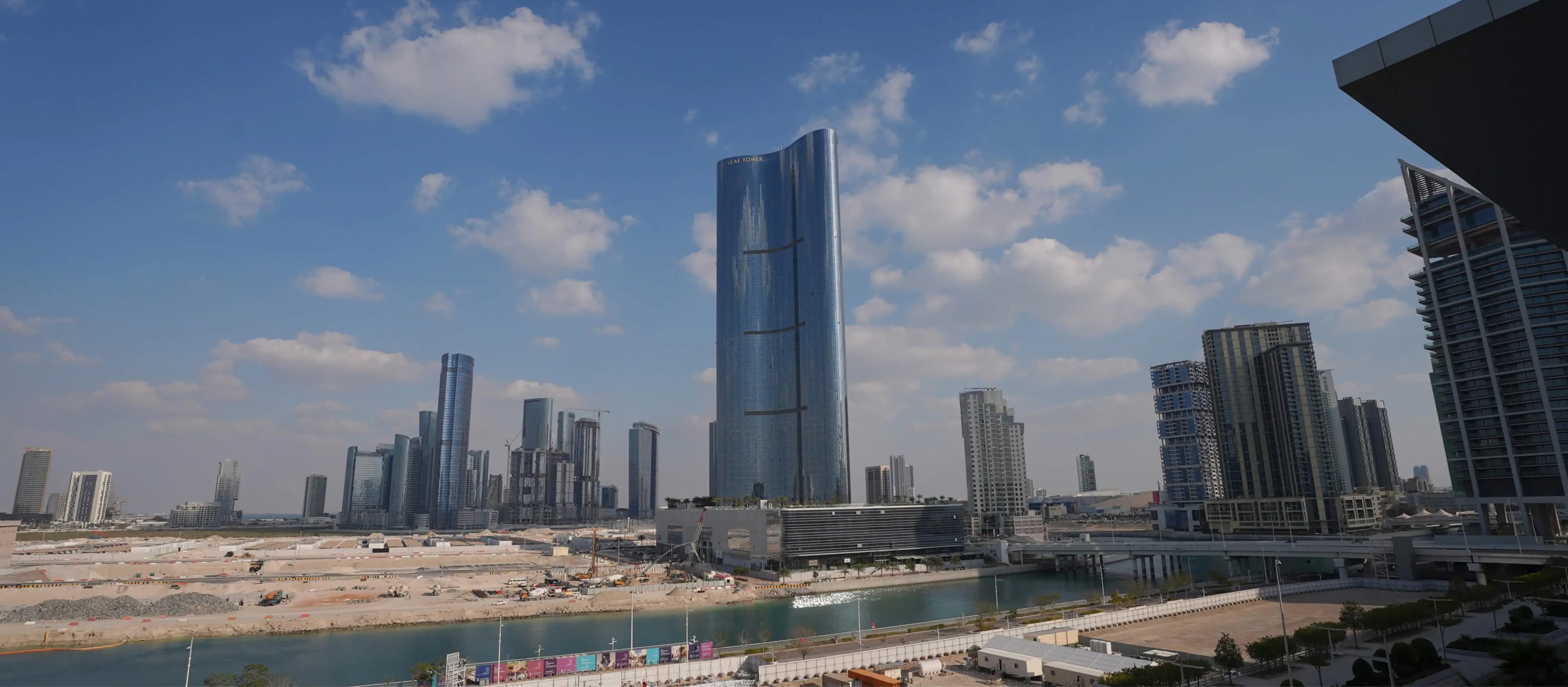
The expansion has not been organic alone. In 2023, ADGM’s jurisdiction was extended by UAE Cabinet Resolution to include Al Reem Island, expanding its footprint to over 14 million square metres making it one of the largest financial districts anywhere in the world. By the end of 2024, all 1,100 businesses on Al Reem Island had transitioned to ADGM commercial licences, completing the integration.
By the close of 2025, ADGM’s tenth anniversary year, the picture had become even more compelling within Abu Dhabi’s diversification strategy. Active licenses reached 12,671, a 30 per cent annual increase. The workforce within the jurisdiction grew 51 per cent to 44,339 professionals. Assets under management rose a further 36 per cent. In December 2025, Binance became the first crypto exchange globally to secure a formal license from ADGM’s Financial Services Regulatory Authority, underscoring the centre’s appetite for digital asset innovation.
Abu Dhabi’s Diversification Strategy: The Sovereign Wealth Advantage
Undergirding all of this is Abu Dhabi’s unparalleled capital base. The emirate’s sovereign wealth funds collectively managed approximately US$1.7 trillion in assets in 2024, making it, by some measures, the wealthiest city on Earth. Global fund managers do not travel to Abu Dhabi Finance Week simply for the panels; they come because the capital sitting across the table is real, patient, and enormous.
Abu Dhabi Finance Week, launched in 2022, has itself become a signal of the centre’s rising status. By 2024, it had grown into the largest financial event in the Middle East, drawing more than 20,000 participants from over 172 countries collectively representing over US$42.5 trillion in assets under management. The 2025 edition doubled in size, featuring 68 events, 394 sessions, and over 800 speakers. This reflects a genuine shift in where the global financial conversation is happening.
Regulatory Architecture as Competitive Advantage
Abu Dhabi’s leadership understood early that attracting capital requires more than tax incentives. It requires trust- and trust is built through governance. ADGM’s Financial Services Regulatory Authority has pursued a twin track of openness and rigour within Abu Dhabi’s diversification strategy: pioneering a regulatory framework for virtual assets as early as 2018, while simultaneously enforcing strict CRS/FATCA compliance standards. In 2025, it imposed penalties across 23 entities for non-compliance – a signal that the centre will not sacrifice credibility for growth.
By end-2025, Abu Dhabi had been ranked as the number one financial centre in the MENA region and 12th globally in the NYU Stern School of Business Financial Centre Competitiveness Index. The stated ambition is to reach the top five globally and given the trajectory, that goal no longer reads as aspirational rhetoric.
The Road Ahead in Abu Dhabi’s Diversification Strategy
The transformation is real, but it remains unfinished. Abu Dhabi still derives significant revenues from hydrocarbons, and non-oil sectors, while growing, must continue to deepen. The emirate’s long-term success as a financial hub will depend on its ability to cultivate homegrown talent, maintain regulatory independence, and sustain the institutional trust it has worked hard to build.
What is clear is that Abu Dhabi is no longer simply betting on oil, but it is betting on capital itself. And increasingly, the world’s money is taking that bet seriously.