


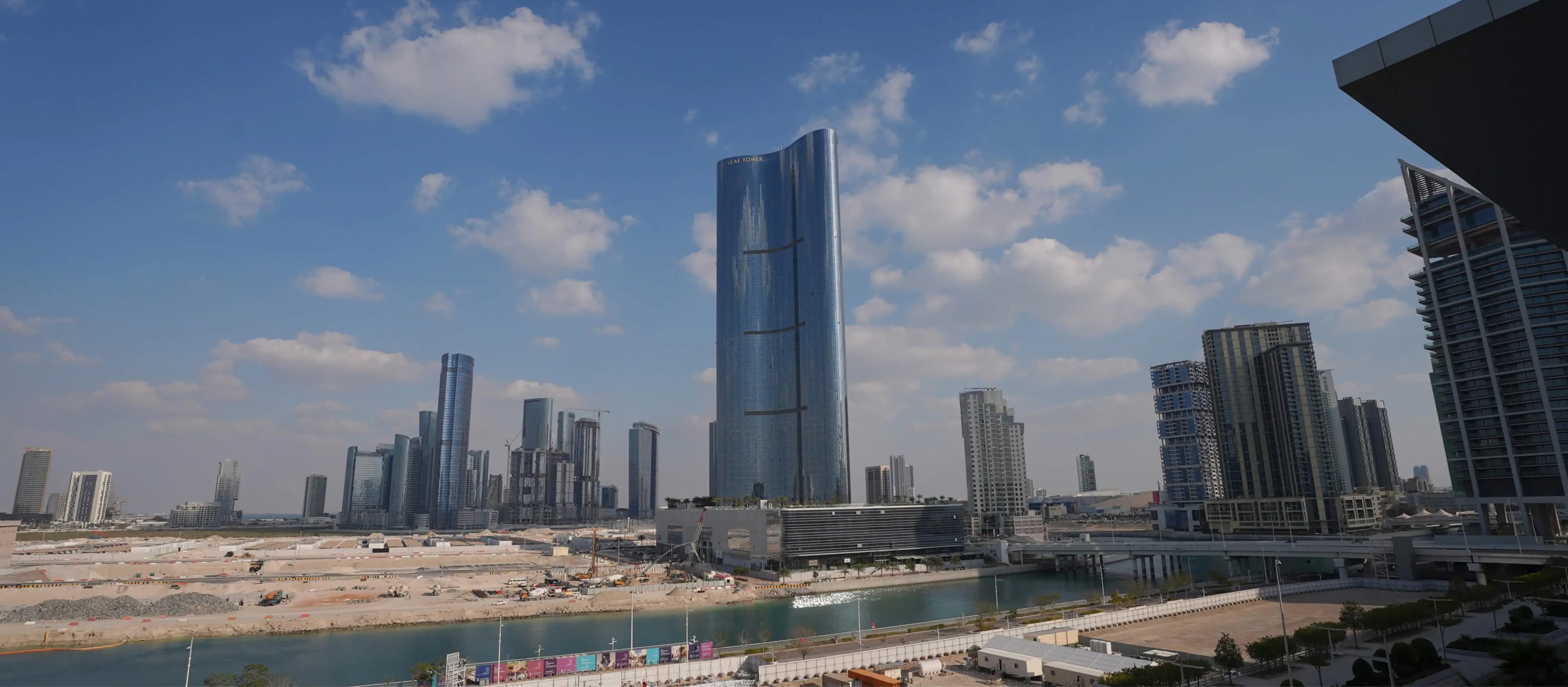

Resilience is often spoken about as a reaction to crisis. Abu Dhabi has redefined it as a system that is designed, tested, and continuously refined. In the years following the COVID-19 pandemic, and now in the more complex global environment of 2026, the emirate has recalibrated its economic and leadership model to thrive amid uncertainty.
Beyond Recovery: Rewriting the Economic Narrative with Abu Dhabi Resilience Strategy
The immediate post-pandemic years were defined by stabilization. But by 2024–2026, Abu Dhabi had shifted gears from recovery to acceleration. The focus was no longer on restoring pre-pandemic activity, but on reshaping the economic base itself.
This shift is evident in the UAE’s consistent push toward non-oil growth. Sectors such as financial services, advanced manufacturing, renewable energy, and technology have moved from supporting roles to primary drivers. Institutions like Abu Dhabi Global Market have played a central role in this transformation, attracting global capital, fintech innovators, and asset managers into a rapidly evolving ecosystem.
At the same time, long-horizon investors such as Mubadala Investment Company have demonstrated how strategic capital deployment during downturns can generate exponential returns during recovery cycles. This combination of policy direction and investment strategy has allowed Abu Dhabi to turn disruption into structural advantage.
Leadership Under Pressure: A Shift in Mindset
What differentiates Abu Dhabi’s response is its leadership philosophy. Crisis leadership here has evolved beyond command-and-control models into adaptive, data-informed governance.
During the pandemic, decisions were made quickly, but not impulsively. Real-time data, scenario planning, and cross-sector collaboration shaped policy direction. In 2026, this approach continues to guide responses to inflationary pressures, supply chain fragmentation, and geopolitical uncertainty.
The lesson here is subtle but powerful: adaptive leadership is about thinking ahead more effectively.
Abu Dhabi Resilience Strategy: Building Economic Shock Absorbers
A key feature of Abu Dhabi’s resilience strategy is the deliberate creation of “shock absorbers” within the economy. These are systems, policies, and institutions designed to absorb volatility without systemic breakdown.
One such absorber is diversification. By reducing dependence on hydrocarbons, Abu Dhabi has insulated itself from global oil price swings. Another is regulatory flexibility – free zones and financial centers offer adaptable frameworks that can quickly respond to changing business needs.
Infrastructure has also played a role. Investments in logistics, ports, and digital connectivity have ensured continuity even during global disruptions. This was evident during the pandemic and continues to be relevant in 2026, as global trade routes face renewed uncertainty.
These mechanisms collectively ensure that when shocks occur, they are absorbed and not amplified.
Digital Transformation: From Enabler to Core Strategy
If there is one area where crisis accelerated progress, it is digital transformation. What began as a necessity during lockdowns has become a defining pillar of Abu Dhabi’s economic strategy.
Government services are now largely digitized, reducing friction for businesses and individuals alike. Business formation, licensing, and regulatory compliance can be managed remotely, positioning Abu Dhabi as one of the most efficient jurisdictions globally.
More importantly, digital transformation has extended into emerging sectors. Artificial intelligence, blockchain, and fintech are embedded within the economic framework.
This shift has redefined competitiveness. In 2026, the question is no longer whether an economy is digital, but how deeply digital capabilities are integrated into its growth model and Abu Dhabi has moved decisively ahead.
The Human Element: Trust, Talent, and Stability
Economic resilience is not built on policy alone, but it also requires trust. Abu Dhabi’s leadership has consistently emphasized transparency, communication, and institutional reliability. During periods of uncertainty, this has translated into sustained investor confidence and social stability.
Talent attraction has also been a priority. Long-term visas, business-friendly regulations, and a high quality of life have positioned the UAE as a global hub for skilled professionals. This influx of talent has strengthened innovation ecosystems and supported sectoral diversification.
In many ways, this is where leadership becomes most visible in the confidence they inspire.
Abu Dhabi Resilience Strategy: Crisis Response to Opportunity Creation
Perhaps the most defining aspect of Abu Dhabi’s journey is its ability to convert crisis into opportunity.
- The pandemic accelerated healthcare innovation and infrastructure development.
- Supply chain disruptions led to investments in local manufacturing and logistics resilience.
- Global economic shifts opened doors for capital inflows and business relocations.
Rather than attempting to restore the old normal, Abu Dhabi has consistently focused on building a better one. This forward-looking approach has ensured that each disruption leaves the economy stronger than before.
Lessons for 2026 and Beyond
As global economies continue to tackle uncertainty, Abu Dhabi resilience strategy offers a set of practical, transferable insights:
- Resilience must be designed, not improvised.
Strong institutions, diversified economies, and clear policy frameworks are essential before a crisis occurs.
- Leadership must evolve with complexity.
Adaptive, data-driven decision-making is more effective than rigid, hierarchical models.
- Growth should be future-oriented.
Investments in technology, sustainability, and human capital create long-term stability.
- Confidence is a strategic asset.
Transparent governance and consistent policy direction are critical in maintaining trust.
The Road Ahead
In 2026, the resilience strategy of Abu Dhabi stands at a unique intersection – stable yet ambitious, resilient yet adaptive. Its journey from crisis to prosperity is not a closed chapter but an ongoing process.
As new challenges emerge – whether technological disruption, climate transitions, or geopolitical shifts – the emirate’s approach suggests it is well-prepared not just to withstand them, but to leverage them.
The real takeaway is this: resilience is no longer about bouncing back. In Abu Dhabi’s case, it is about bouncing forward, continuously redefining what sustainable prosperity looks like in a rapidly changing world.